Shabbos isn’t a break. It’s a full buyout.
- By Rabbi Landau
- Duration: 38 seconds
Concepts: The Sanctuary of Shabbat Tech
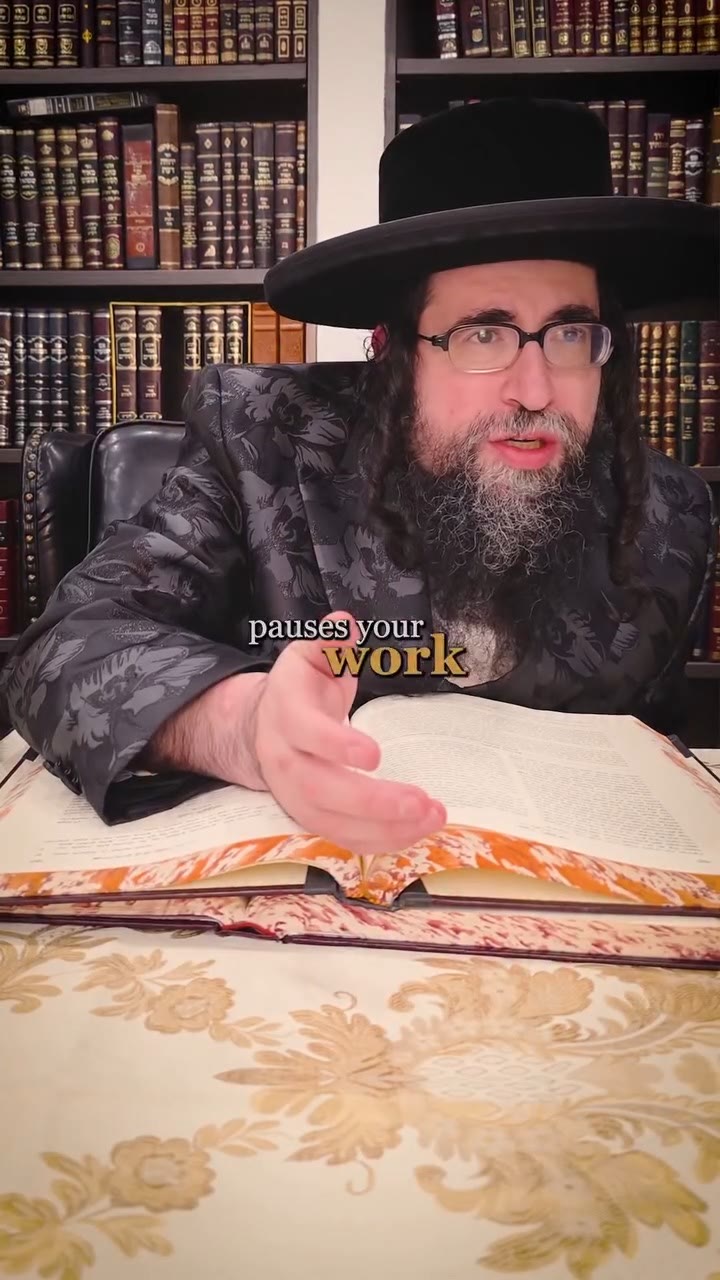
Rabbi Landau teaches Shabbos isn’t a break. It’s a full buyout.
Instagram caption
Shabbos isn’t a break. It’s a full buyout.
When Shabbos enters, your work is officially finished melachtecha asuya because Shabbos buys it entirely.
The worry and pressure are legally off your hands.
But a buyout requires the seller to actually let go.
If you keep managing, stressing, and holding the wheel on Shabbos, you void the sale.
And when the deal collapses, everything dumps right back onto you at Havdalah.
Let go of the control, and you get back bracha.
Hold onto the baggage, and you get your stress back.
Support our work at:
https://rivnitz.com/donate
Questions from this teaching
Q: Is Shabbos just a weekly break from our jobs and chores?
Rabbi Landau answers: I often remind people that Shabbos is far more than a simple pause in your routine. It is a full buyout where your entire life gets acquired, and you are considered completely finished with your work. The Torah concept of melachtecha asuyah means Shabbos officially takes your responsibilities entirely out of your ownership.
Q: What does the Torah mean when it says our work is finished on Shabbos?
Rabbi Landau answers: When the Torah refers to melachtecha asuyah, it means that your work is considered done because Shabbos removes it completely from your hands. It is not just about stopping physical labor; the legal ownership of your worries, pressure, and anxiety is taken away. Shabbos completely acquires the burden so you no longer own it.
Q: Why is worrying on Shabbos compared to voiding a buyout?
Rabbi Landau answers: In any valid buyout, the seller has to step aside and fully let go of the business. If you continue managing, worrying, and holding the wheel during Shabbos, you make the transaction into a mekach ta'us—a mistaken, invalid sale. By interfering and refusing to let go, you cause the entire deal to collapse.
Q: What happens at Havdalah if I spent Shabbos feeling stressed?
Rabbi Landau answers: If you hold onto the wheel during Shabbos, the buyout collapses and everything snaps right back onto you at Havdalah. Because you refused to relinquish ownership, every ounce of stress and unresolved baggage gets dumped directly back into your lap. You leave Shabbos carrying the very weight you were meant to give away.
Q: How do I ensure I receive blessing instead of stress from Shabbos?
Rabbi Landau answers: To receive the blessing of Shabbos, you must actually honor the buyout and release control. When you let go of the management and anxiety, the deal stands and you get back true bracha. But if you hold onto your baggage and refuse to surrender ownership, all you get in return is your stress.
Sources and background
The teaching, expanded
Most people treat Shabbos like an intermission in a long, grueling play. You run, you hustle, you manage your affairs for six days, and then Friday evening arrives and you press pause. But treating Shabbos like a simple break misses its revolutionary spiritual power. Shabbos is not a pause; it is a full, non-negotiable corporate buyout.
Our Sages teach on the verse, 'Six days you shall labor and do all your work,' that when Shabbos enters, it must appear in your eyes as if all your work is already completely finished—*melachtecha asuyah*. How can you possibly feel that your work is done when invoices remain unpaid, projects sit half-finished on your desk, and unanswered emails are piling up in your inbox? The answer lies in understanding the mechanics of a buyout. In corporate mergers and acquisitions, there is an exact hour known as the closing date. At that moment, legal title, operating liabilities, and risk are signed away. You don't own the company anymore; the buyer does. When the sun dips beneath the horizon on Friday, the Master of the Universe executes a total acquisition of your life. Your tasks are not sitting in suspended animation waiting for your attention; the enterprise has been handed over entirely to Him.
Yet, as any business advisor will tell you, the hardest part of an acquisition is rarely the legal paperwork—it is the founder's psychology. Studies on business exits show that the majority of founders experience severe seller's remorse within a year of selling, largely driven by the agonizing struggle to surrender daily control. A founder who has spent decades running a firm often lingers in the corridors, meddling in meetings and micromanaging staff, even after the sale is finalized. They end up in the worst conceivable situation: they have cashed out, yet they still bear every ounce of anxiety without holding any authority to fix the problems.
This is precisely what many of us do to ourselves on Shabbos. We dress in our finest clothes, we sit at the Shabbos table, but our minds are still pacing the halls of our weekday operations. We mentally audit our bank accounts between courses, rewrite proposals in our heads during Kiddush, and carry the crushing weight of unresolved dilemmas throughout the day. By refusing to let go of the steering wheel, we spiritually invalidate the transfer. We act as though the sale was a fraudulent transaction—a *mekach ta'us*—refusing to let the Buyer actually assume the risk.
When you insist on holding onto the baggage throughout the twenty-five hours of Shabbos, you deprive yourself of both worlds. You forfeit the profound serenity of genuine faith, and when Havdalah comes, the entire burden snaps right back onto your shoulders, leaving you just as depleted as you were on Friday afternoon. If you spent Shabbos worrying, you did not rest; you merely postponed your anxiety and added exhaustion to it.
The holy work of Erev Shabbos is learning how to execute a clean break. It is closing the laptop, setting down the phone, and declaring to the Creator: 'Up until this moment, You gave me the responsibility of partnership. But now the hour has arrived. The buyout is complete. The business is Yours, my family is Yours, my health is Yours, and my future is Yours.' When you genuinely let go of control, Shabbos repays you with abundant *bracha*. Step away from the wheel, honor the closing terms, and allow Hakadosh Baruch Hu to run His world.
Torah sources
- Rashi on Shemot 20:9 (citing Mechilta) ('Six days you shall labor and do all your work'—When Shabbos arrives, it should appear in your eyes as if all your work is completely done, so that you do not think about work at all.) — Directly establishes the speech's core principle of 'melachtecha asuyah'—that a person must view their labor as entirely completed upon the onset of Shabbos.
- Talmud Bavli, Shabbat 113a-b (Deriving from Isaiah 58:13, the Sages teach that one's speech and pursuits on Shabbat must not resemble their weekday speech or pursuits ('mimtzo cheftzecha v'daber davar').) — Illustrates the prohibition against managing, planning, or verbally handling one's weekday affairs and anxieties on Shabbos.
- Chovot HaLevavot, Sha'ar HaBitachon, Chapter 4 (One who trusts in God realizes that his livelihood is decreed, and that anxiety and striving beyond the required effort do not increase his provision, but only rob him of peace of mind.) — Provides the theological foundation for the essay, demonstrating that holding onto worry reflects a lack of surrender to divine providence.
Background reading
Background research gathered for this teaching. These are not Rabbi Landau's words.
In corporate mergers and acquisitions, the definitive moment of a buyout is known as the **closing date**—the exact hour when title, operational authority, and legal liability transfer entirely to the buyer. At that moment, the seller is legally divested of the company’s risks, debts, and daily burdens. Yet, M&A advisors and psychologists widely recognize that the hardest part of any sale is not executing the paperwork, but the founder’s inability to emotionally surrender ownership. Surveys by the Exit Planning Institute have found that nearly three out of four business owners experience profound seller’s remorse within a year of closing, driven almost entirely by the sudden loss of control and daily identity rather than financial dissatisfaction.
When founders refuse to let go and insist on lingering in the halls, the buyout often turns toxic. Studies on post-acquisition retention show that over half of acquired startup founders depart within two years, frequently because trying to micromanage an operation that no longer belongs to them creates unbearable friction. A former owner who still acts as if every problem is theirs to solve ends up in the worst possible position: they have cashed the payout, yet they continue to bear 100% of the anxiety without having any authority to fix it.
In corporate deal-making, advisors frequently preach that a successful exit requires a **clean break**. If an owner cannot accept that the business is truly out of their hands, they sabotage both the new management and their own freedom. True peace only arrives when the seller honors the terms of the closing document: stepping away from the wheel and letting the new owner carry the full weight of the enterprise.
Book themes
- The Sanctuary of Shabbat — Explores the deeper spiritual dimension of Shabbat as a complete release from labor, a restoration of the soul, and an island of holy tranquility beyond mere rules.
Go deeper: five levels
Surface claim
Shabbos is not merely a temporary pause in work, but a complete financial and spiritual buyout (melachto asuyah) where one's life and labors are permanently removed from personal ownership. If an individual attempts to retain control or worry during this time, the transaction is treated as invalid (mekach ta'us), causing the unresolved anxieties and burdens to snap back upon Havdalah rather than returning blessings.
What may be behind it
The speaker may be seeking a vivid, commercial metaphor that resonates with modern, business-minded individuals to explain the traditional rabbinic concept of considering all work done. This framing could be designed to challenge the habit of passively resting while remaining mentally tethered to worldly responsibilities.
Underlying need or longing
There may be a profound yearning for radical relief from the chronic weight of responsibility, ambition, and vigilance. The text points toward a desire for a sacred mechanism that grants permission to achieve complete detachment from anxiety and productivity without guilt.
Fear, vulnerability, or tension
The teaching highlights a tension between the compulsion to retain control and the vulnerability required to genuinely let go. There could be an underlying fear that resting without mental relinquishment renders one's spiritual observance inauthentic or ineffective, leaving the person trapped under their unresolved baggage when daily life resumes.
Deepest human truth
True rest cannot be experienced merely through the cessation of physical action; it demands an internal surrender of ownership and control. Humans often struggle to disconnect from the identity of the manager or provider, yet peace depends on the capacity to fully relinquish the illusion of ultimate control over one's life.
Download the dossier
This teaching's own words, Torah sources and depth points, in English and Lashon Kodesh. The sefer chapter is not yet linked.
Download the dossier (PDF)Rabbi Landau explains — full transcript
You think Shabbos pauses your work? No, it's actually a full buyout. When Shabbos comes in, your whole life gets bought out. You are permanently done with it. That's melachto asuyah. Your work is considered done because Shabbos removes it completely from your ownership. The worries, the pressure, the anxiety, it's all off. In any buyout, the seller has to let go fully. If you keep controlling the business—deciding, worrying, interfering—then the whole sale becomes a mekach ta'us. So if the sale is collapsed, everything is going to snap back to the seller, and that's Havdalah. If you let go, you get back the blessings. If you don't, you get back your baggage.