People can accept that they were wrong. What they cannot accept is that their entire life was wasted.
- By Rabbi Landau
- Duration: 1 minute
Concepts: Wisdom, Speech, and Community Personal growth Teshuva Empathy
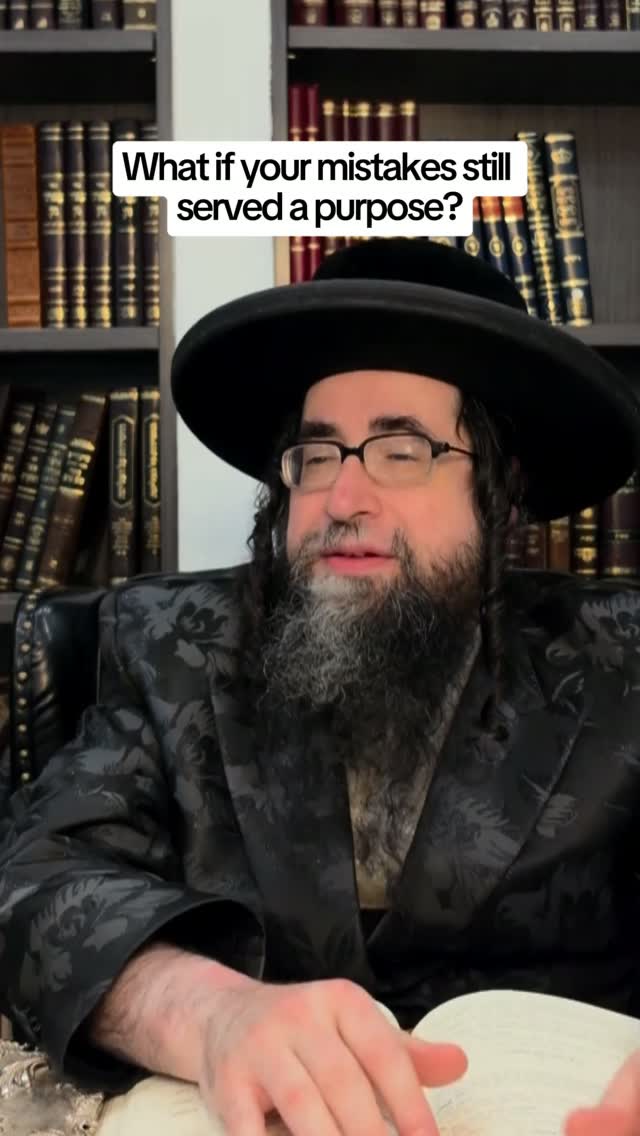
Rabbi Landau teaches People can accept that they were wrong. What they cannot accept is that their entire life was wasted.
Instagram caption
People can accept that they were wrong. What they cannot accept is that their entire life was wasted.
Before you expose someone’s false beliefs, think about what you’re asking them to lose: Years of decisions. A marriage. A career. A lifetime of sacrifices. They aren't fighting the truth; they're afraid of their past.
I once told a 70-year-old man who realized his life was driven by ego: "Look how many people you helped and what you built because of it!"
Hashem uses even our false motives to bring us where we need to be.
וְזָכַרְתָּ אֶת כָּל הַדֶּרֶךְ אֲשֶׁר הוֹלִיכֲךָ ה׳ אֱלֹקֶיךָ.
Just because your motives were wrong doesn't mean your life was wasted.
✨ Support the mission → https://rivnitz.com/donate
Questions from this teaching
Q: Why do people resist the truth so fiercely when they are proven wrong?
Rabbi Landau answers: In my experience, people are not necessarily fighting the truth; they are terrified of what it means about their past. People can accept that they were wrong, but what they cannot easily accept is the thought that their entire life was wasted. Confronting a false belief forces them to look at years of sacrifices, careers, and family decisions and fear that it was all in vain.
Q: What should I keep in mind before confronting someone about their false beliefs?
Rabbi Landau answers: Before you expose someone's hidden motives or false beliefs, I ask you to think about what you are asking them to lose. You are asking them to confront years of decisions, including their marriage, divorce, career, and parenting choices. When you understand how much of their identity and sacrifice is on the line, you will approach them with far more compassion.
Q: What should I do if I realize my life's achievements were driven by ego or atten
Rabbi Landau answers: A man over 70 once came to me feeling devastated because he realized his whole life had been driven by seeking attention. I told him to look at how many people he helped and what he built because of that drive. Even if your motives were flawed, the positive impact you made and the people you supported are very real.
Q: Can Hashem use our imperfect or selfish intentions for a good purpose?
Rabbi Landau answers: Yes, I believe Hashem uses even our false motives to bring us to where we need to be. The Torah teaches us, 'V'zocharta es kol haderech asher holichacha Hashem Elokecha'—remember the entire journey that Hashem led you through. Every step of that journey, even the parts fueled by ego or misunderstanding, played a role in bringing you to where you are today.
Q: Does realizing I had the wrong motives mean my past efforts were a waste?
Rabbi Landau answers: Not at all. Just because your motives were wrong does not mean your life was wasted. What you built, the people you helped, and the sacrifices you made along the way still hold value, and Hashem uses that entire path to shape who you are.
Sources and background
The teaching, expanded
Whenever we attempt to correct someone, expose an ideological error, or dismantle an illusion, we must ask ourselves what we are truly asking them to surrender. People can tolerate being mistaken. We admit small oversights every day. What the human soul cannot easily endure, however, is the existential horror of believing that decades of sacrifice, sweat, and tears were completely in vain.
Consider the sheer weight of what an individual commits to their convictions over a lifetime: the choice of a spouse, the trajectory of a career, decades of parenting decisions, financial sacrifices, and emotional endurance. When someone digs in their heels and fiercely defends a compromised position, they are rarely fighting to protect an abstract concept. They are fighting for survival. They are defending their life story against the terror of an absolute void—the agonizing thought that their past has unraveled into meaninglessness.
Not long ago, a man well into his seventies sat across from me in genuine distress. Reaching that reflective juncture of life, he looked back over the arc of his achievements and confessed with deep shame, "Rabbi, I finally see it clearly: my entire life was fueled by a hunger for attention and ego." He felt utterly crushed, ready to write off seventy years of effort as a hollow sham.
There is a profound psychological hazard here—what thinkers describe as allowing a newfound flaw to retroactively poison decades of genuine accomplishment. We fall into the trap of believing that if the seed was imperfect, the harvest must be rotten. But I told him: "Look at what you actually did with that drive. Look at the families you supported, the institutions you helped establish, the people who found shelter and dignity because of your ceaseless energy. Did their relief vanish because your inner motives were mixed? Hashem works through the clay of our flawed humanity. Perhaps the Master of the World took that very hunger and channeled it to build worlds that wouldn't have existed otherwise."
This is the heartbeat of the verse in Devarim: *V'zocharta et kol haderech asher holichacha Hashem Elokecha*—"And you shall remember the entire way that Hashem your God led you." The Torah does not instruct us to remember only the moments of immaculate spiritual purity. We are commanded to remember the *entire* journey—the detours, the wilderness, and the seasons where we were propelled by raw ambition or unresolved insecurity. Providence weaves even our tangled drives into His ultimate design.
This perspective is not an excuse for moral complacency, nor does it grant permission to remain self-absorbed. The Torah constantly calls us to refine our hearts, moving from *shelo lishmah* (impure motivation) to *lishmah* (pure devotion). But when our Sages taught that one begins *shelo lishmah* so that they may eventually arrive at *lishmah*, they were validating the stepping stones. The immature origin does not cancel the holy destination.
When our Sages speak of *teshuvah mei-ahavah*—repentance born of love—they reveal that deliberate missteps are astonishingly transformed into merits. True repentance does not demand that we erase our history; it redeems it. When you speak to someone facing a difficult realization, or when you confront the blind spots of your own past, tread with immense gentleness. Do not strip away their dignity. Remind them that just because their motives were imperfect does not mean their life was wasted.
Torah sources
- Devarim 8:2 (And you shall remember the entire path that the Lord your God led you these forty years in the wilderness, to afflict you and test you, to know what was in your heart.) — Underlines that God leads a person through the entire winding journey, flaws and detours included, as an essential process of spiritual formation.
- Talmud Bavli, Pesachim 50b (A person should always engage in Torah and mitzvot even if not for their own sake (shelo lishmah), for from doing so not for their own sake, one comes to do so for their own sake (lishmah).) — Affirms that mixed and imperfect motivations are not wasted effort, but valid and necessary stages on the path toward genuine purity.
- Talmud Bavli, Yoma 86b (Great is repentance done out of love, for a person's intentional sins are transformed into merits.) — Demonstrates the Torah's redemptive power over the past: previous shortcomings are not merely wiped clean, but retroactively integrated into a person's good deeds.
- Midrash Tanchuma, Vayeshev 4 (The tribal ancestors were busy selling Joseph, Reuben was busy with his sackcloth and fasting, Jacob was in mourning, and Judah went to seek a wife—while the Holy One, blessed be He, was engaged in creating the light of the Messiah.) — Illustrates how Divine Providence orchestrates redemptive outcomes even through the blind spots, human frailties, and confused motives of mankind.
Questions to discuss
- When looking back at past achievements driven by ego, insecurity, or a desire for approval, how can you honor the good that was done without excusing the flawed motive?
- How does the Talmudic concept of 'shelo lishmah' (acting for ulterior motives) change the way we evaluate our own personal growth and spiritual history?
- When offering constructive criticism to a spouse, child, or colleague, how can we separate correcting an error from invalidating the effort and sacrifices they made along the way?
- Why do people often experience panic or hostility when confronted with truth, and how can understanding this help us engage them with greater compassion?
Background reading
Background research gathered for this teaching. These are not Rabbi Landau's words.
In developmental psychology, this existential terror is at the heart of Erik Erikson’s final stage of life: **Ego Integrity versus Despair**. Around age 65 and older, individuals enter a natural retrospective "life review," confronting the fundamental question of whether their existence had meaning. Erikson noted that despair sets in not from simply recognizing mistakes, but from the agonizing sense that one’s life was fundamentally wasted—accompanied by the bitter panic that time is now too short to start over and live it differently. When someone fiercely resists admitting they were wrong about their long-held beliefs, marriages, or careers, they are rarely defending an abstract idea; they are desperately defending themselves against the existential collapse of feeling that decades of sacrifice were spent on an illusion.
The resolution to this crisis is reflected in Northwestern University psychologist Dan McAdams’ research on **narrative identity** and **redemption sequences**. McAdams found that the most psychologically healthy and generative adults—those who actively nurture and build up others—do not look back on lives with pristine beginnings. Instead, their life stories follow a redemptive arc, where flawed motives, mistakes, or suffering are re-integrated as the necessary passages that gave rise to genuine service, wisdom, and maturity. The opposite hazard is what McAdams terms a "contamination script," where a newfound flaw is allowed to retroactively poison decades of real accomplishment. Helping someone preserve their dignity doesn't mean pretending their motives were pure; it means showing them that their tangible good was real, and that a flawed starting point was still part of a redemptive path.
Book themes
- Wisdom, Speech, and Community — Navigating friendships, honest dialogue, handling conflict, judging favorably, and elevating our interactions with society and fellow human beings.
Emotional pains this teaching answers
The terror that if I let myself see the truth about why I lived the way I did, I will have to admit that my whole life, with every sacrifice, every year and every choice, added up to nothing.
- The fear that my life was wasted
“Just because your motives were wrong doesn't mean your life was wasted.”
- The shame of finding out my good deeds were really about me
“So perhaps Hashem uses even those false motives to bring you to where you are today.”
- Holding on because letting go would make my sacrifices meaningless
“They're not necessarily fighting the truth, they're afraid of what it means about their past.”
- The regret of having built my family on the wrong reasons
“Years of decisions: their marriage, their careers, their divorce, their parenting, lifetime of sacrifices for their beliefs.”
- The loneliness of being right and not being let in
“So before exposing someone's hidden motives or false beliefs, think about what are you asking them to lose.”
Go deeper: five levels
Surface claim
Before confronting someone with their flawed beliefs or hidden motives, one should consider the existential cost of that realization; people resist truth not out of malice, but out of fear that their sacrifices and choices were meaningless. Even if personal motives were imperfect, the outcomes can still carry genuine value and form part of a purposeful journey.
What may be behind it
The speaker may be attempting to foster greater empathy and pastoral care in interpersonal encounters, urging individuals to avoid reckless correction that shatters another person's identity. There could also be an intention to comfort those wrestling with late-in-life regret by reframing human shortcomings within a broader divine or constructive framework.
Underlying need or longing
There appears to be a profound longing for existential coherence and redemption—the need to know that one's life, efforts, and suffering were not in vain, and that human frailty can still participate in something good and enduring.
Fear, vulnerability, or tension
The text highlights a deep vulnerability regarding existential despair and retroactive invalidation. The central fear might be that acknowledging a foundational error in one's motives renders decades of marriage, career, and parenting utterly wasted, leaving an unbearable burden of grief and regret.
Deepest human truth
Human beings require meaning to survive, and human motives are rarely pure; true wisdom and compassion recognize that an imperfect journey does not negate the real good accomplished along the way, allowing grace for the past while embracing truth in the present.
Download the dossier
This teaching's own words, Torah sources and depth points, in English and Lashon Kodesh. The sefer chapter is not yet linked.
Download the dossier (PDF)Questions this teaching answers
- I can admit I was wrong, but if I was wrong about this, what were all those years for?
You were wrong, but the road Hashem led you on was never wasted.
- What do I do when I realize everything good I did was really just so people would notice me?
Even the hunger to be seen was something Hashem used to bring real good into the world.
- How do I admit I was wrong when it means everything I gave up was for nothing?
You're not fighting the truth, you're guarding your past, and your past still counts.
- How do I live with knowing I married, divorced, and raised my kids for the wrong reasons, and my family paid for it?
You can own what went wrong without calling your family, or the life you built with it, a mistake.
- Why won't people admit they're wrong when I'm only telling them the truth?
They aren't refusing your truth, they're protecting a lifetime, so offer them the meaning of their journey first.
Rabbi Landau explains — full transcript
So before exposing someone's hidden motives or false beliefs, think about what are you asking them to lose. People can accept that they were wrong. What they cannot easily accept is that their entire life was wasted.
Years of decisions: their marriage, their careers, their divorce, their parenting, lifetime of sacrifices for their beliefs. They're not necessarily fighting the truth, they're afraid of what it means about their past.
You know, a man over 70 actually told me last week, looking back, "My whole life was about seeking attention," and he feels very bad about it. I told him, "And thanks to your attention-seeking nature, look how many people you helped and what you built. So perhaps Hashem uses even those false motives to bring you to where you are today."
V'zocharta es kol haderech asher holichacha Hashem Elokecha. Remember the entire journey Hashem led you through. Just because your motives were wrong doesn't mean your life was wasted.
Language: en